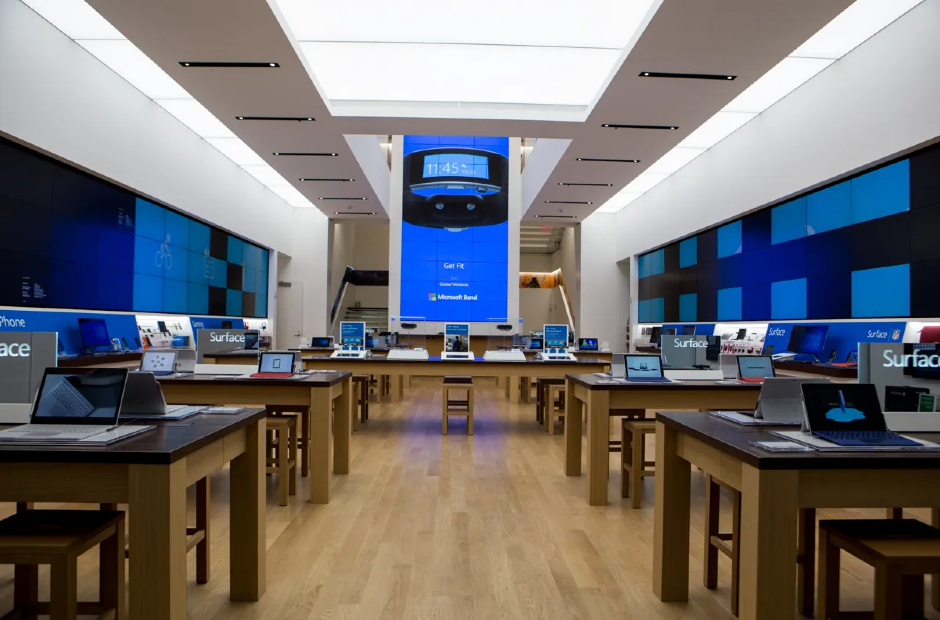
A brand’s retail experience is often seen as the embodiment of its flagship stores. They offer companies the opportunity to highlight their entire product range, tell their brand story and offer customers a pleasant shopping experience.
One approach to enhancing this experience is to add technology to the sales floor, particularly in the window displays. This article explores how augmented reality, touchscreens and digital price signs could improve customer satisfaction while collecting useful consumer data.
Digital price tags
Pricing is an integral part of the customer’s decision-making process. However, traditional price tags can be limiting and labor-intensive to update. Digital price signs should be placed here.
The use of electronic shelf labels or digital price tags is a new and effective approach to displaying prices on stands. They improve the visual appeal of displays, offer real-time price changes and provide more product information.
There are many advantages of using digital price signs on display stands:
- Dynamic pricing. Digital price signs can be updated in real time from a central system. This allows dynamic pricing strategies such as discounts for specific times or price adjustments in response to competitor activity.
- Additional information. Digital tags have the ability to show more about the item in addition to the price. Giving customers more information about the product, including its history, the materials it is made of, and feedback from others.
- Aesthetic appeal. Digital price tags appear tidy and modern. This may enhance the stands’ look and produce a modern, high-tech shopping environment.
In addition, the sleek and modern look of the stands adds to their visual appeal and creates a high-tech shopping atmosphere. All things considered, the use of digital price signs improves customer service, increases efficiency and makes store displays more visually appealing.
Touch Screen Panels
Adding touchscreens to displays is an additional method of embracing technology. Interactive kiosks can be implemented with touchscreen panels. They simplify purchases, offer comprehensive product information and provide recommendations.
Touch-screen panels can improve customer satisfaction and speed up processes in the following ways:
- In-depth product information. Touch screen panels can provide detailed product specifications, usage instructions, or styling tips. It gives customers a better understanding of your products.
- Product availability and location. These panels can be linked to your inventory system to show product availability or direct customers to the location of the product in the store.
- Personalized recommendations. By incorporating AI and machine learning, touchscreen panels can provide personalized product recommendations based on customer inputs or purchase history.
- Self-checkout. Touchscreen panels can facilitate self-checkout for a fast and seamless shopping experience. It reduces waiting times and freeing up your staff for other tasks.
By leveraging AI and machine learning, touchscreen panels can offer personalized product recommendations based on customer inputs or purchase history. Additionally, they enable self-checkout, resulting in faster and more efficient shopping experiences while freeing up staff for other responsibilities.
Augmented Reality Experiences
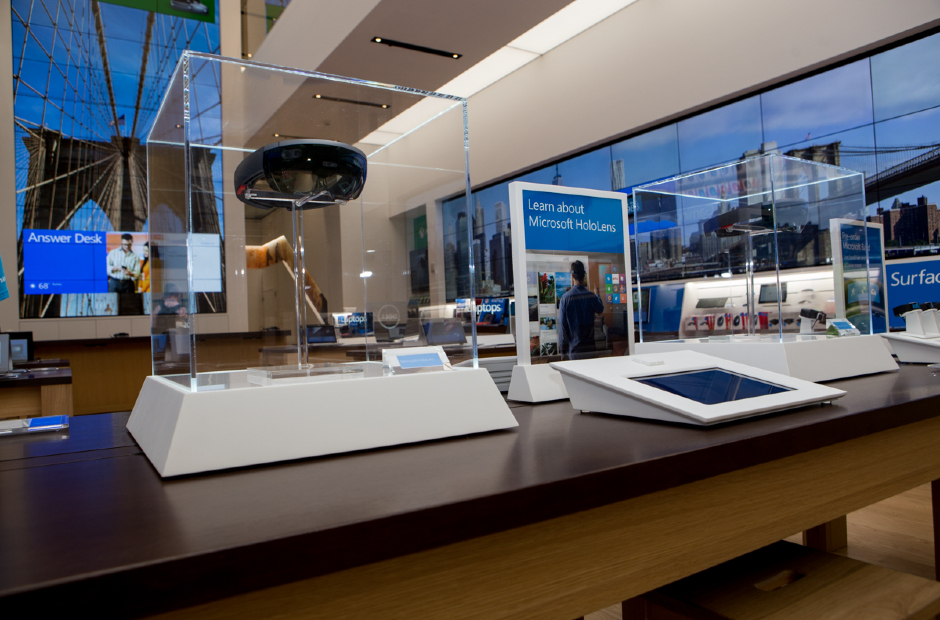
With augmented reality (AR), you can engage your customers and give them a unique shopping experience. Virtual and augmented reality (AR) can help shoppers see products in different environments by combining the real and virtual worlds. Access to more online information when shopping in your flagship store can also be beneficial.
Virtual try-ons
Virtual trials are one of the most widely used digital reality applications in retail. This feature can significantly improve the customer experience, especially for products that are usually suitable.
Customers can view clothes online in stores such as Zara and Gap without having to try them on. Similarly, this technology can be used for jewellery and watch accessories, allowing customers to easily experiment with different looks.
Virtual product testing is available to customers of cosmetics brands such as Sephora and L’Oréal. As physical make-up testing can be messy and time-consuming, it can be particularly useful for products such as lipsticks and eye shadows.
Warby Parker and Ray-Ban customers can virtually play with different spectacle frames. This helps customers choose from a variety of options to suit their needs and style.
Product visualization
Customers can also use augmented reality (AR) to see how things will fit into their personal space or how they will look. This is particularly useful for appliances, furniture and home décor, for example, whose size and appearance can influence a buyer’s choice.
You can try augmented reality apps like Ikea and Pottery Barn to get an idea of how furniture will look in your home. Before purchasing, customers can see if the product fits their space and matches their interior style.
Samsung and LG provide AR apps that let customers visualize how appliances like refrigerators or washing machines would fit into their homes. Saatchi Art let customers visualize how artwork or wall decor items would look on their walls. It helps them choose pieces that complement their existing interiors.
Interactive product information
AR can also be used for interactive product demonstrations or to show additional product information. When consumers use their mobile devices to point to specific products or QR codes, it can be used. AR can offer an interactive way to show certain product features or specifications.
For example, pointing a smartphone at a smart TV in a store could display an overlay of its:
- technical specifications
- compatible devices
- subscription services.
AR can show customers how a product works. AR app for a coffee machine could show a demonstration of how to set up the machine and brew coffee. It can also be used for brand storytelling. It can also be adapted for brand storytelling.
For customers, it can be an enjoyable and interactive way to learn more about the organisation’s history, guiding principles or production processes. Your flagship store can become an interactive wish and place for customers through augmented reality experiences.
These augmented reality features enhance the user experience. They are offering customised, educational and entertaining materials that increase sales and foster brand loyalty.

Integrating technology in flagship stores
Integrating technology in flagship stores, particularly display stands, is not just about staying current with the latest retail trends. It’s about enhancing the customer experience, making operations more efficient, and leveraging data to understand your customers better. By integrating digital price tags, touchscreen panels, and AR into your flagship store, you can create a high-tech shopping environment.
By utilizing these technologies, you can turn your flagship shop into an attraction for people to explore, teach themselves, and actively interact with your brand as well as to acting as a place where they may purchase products. Creating such distinctive and unforgettable experiences can make your brand stand out and strengthen your bonds with clients.
Check out this fascinating article, “How Apple’s Vision Pro headphones might change employee onboarding,” to learn more about how these headphones could modernize employee onboarding and to broaden your knowledge of technology.