

Have you ever wondered why you’re asked to identify traffic lights, crosswalks, or buses in a series of images before accessing a website? That’s CAPTCHA in action! In this digital age, online security is more important than ever. In this article, we’ll dive into the world of CAPTCHA and explore its role in online security.
Understanding CAPTCHA

What is CAPTCHA?
CAPTCHA, which stands for Completely Automated Public Turing test to tell Computers and Humans Apart, is a security measure designed to differentiate between human users and automated bots. In other words, CAPTCHA is a test that websites use to make sure that you are a real person and not a computer program pretending to be a person.
You might have seen them before when you try to log in or sign up for something online. They usually ask you to do something like type in some letters or numbers, click on pictures, or listen to some sounds. By doing this, you prove that you are a real person and not a computer program trying to cause trouble.
How does CAPTCHA work?
It works by presenting users with a challenge that is easy for humans to solve but difficult for bots. These challenges often involve recognizing distorted text, identifying objects in images, or solving simple math problems.
The Role of CAPTCHA in Online Security

Preventing automated bots
Automated bots can wreak havoc on websites by creating fake accounts, posting spam, or launching cyberattacks. This tool helps prevent these bots from accessing websites, ensuring that only genuine human users can interact with the site’s content and services.
Protecting user data
User data is a valuable commodity in the digital world. Completely Automated Public Turing test serves as a barrier to protect sensitive user information from being accessed or exploited by malicious bots.
Maintaining the integrity of online services
It helps maintain the integrity of online services by preventing bots from manipulating voting systems, submitting fraudulent reviews, or skewing analytics data. By keeping bots at bay, it ensures that online services remain reliable and trustworthy.
Types of CAPTCHA
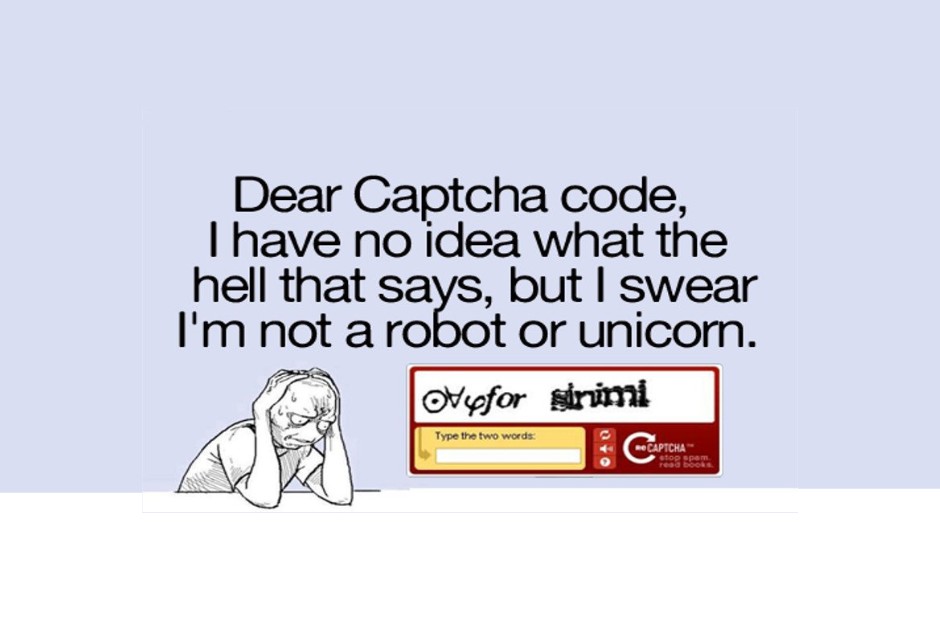
Text-based
Text-based CAPTCHAs require users to decipher distorted text and enter it into a provided field. While this type of CAPTCHA is common, it can be challenging for users with visual impairments. Text-based CAPTCHAs were the original way in which humans were verified.
Image-based
Image-based CAPTCHAs ask users to identify specific objects within a series of images. This type is more user-friendly but may still pose challenges for users with visual impairments. Image-based CAPTCHAs were developed to replace text-based ones.
Audio-based
Audio CAPTCHAs play a series of distorted sounds or words that users must identify and enter into a provided field. This type of CAPTCHA is more accessible for users with visual impairments but may be challenging for users with hearing impairments. Audio CAPTCHAs were developed as an alternative that grants accessibility to visually impaired users
CAPTCHA Alternatives

Biometric authentication
Biometric authentication, such as fingerprint or facial recognition, revolutionizes online security by offering a more user-friendly and highly secure alternative to traditional CAPTCHA.
Leveraging unique physical attributes or behavioral characteristics, biometrics provides a seamless and reliable way to verify the identity of human users, eliminating the need for cumbersome challenges.
Behavioral analysis
Behavioral analysis takes a fascinating approach to distinguish between human users and bots. By monitoring and analyzing user behavior, such as mouse movements, keystroke dynamics, or browsing patterns, sophisticated algorithms can identify subtle cues that differentiate humans from automated scripts.
This advanced technique adds an extra layer of protection, detecting malicious activities and enhancing the accuracy of user verification processes.
Honeypots
Honeypots form a clever defensive mechanism against bots. These hidden form fields are strategically placed on webpages, invisible to human users but detectable by bots. When a bot interacts with the honeypot field, it exposes its non-human nature, allowing websites to flag and block such suspicious activities.
By deploying honeypots, website administrators can effectively trap and identify automated bots, preserving the integrity and security of their online platforms.
The Future of CAPTCHA

Advancements in technology
As technology advances, CAPTCHA will continue to evolve to stay ahead of increasingly sophisticated bots. Future of the technology may include more advanced AI-based challenges or even seamless, invisible methods of differentiating between humans and bots.
Potential challenges and solutions
As the technology advances, so too will the methods used by bots to bypass these security measures. It’s essential to stay informed about the latest developments in CAPTCHA technology and implement updates as needed to maintain a secure and accessible online experience.
Conclusion
CAPTCHA plays a crucial role in online security by preventing automated bots from accessing websites, protecting user data, and maintaining the integrity of online services. By understanding the importance of CAPTCHA and implementing it effectively, website owners can create a more secure and accessible online experience for their users.